
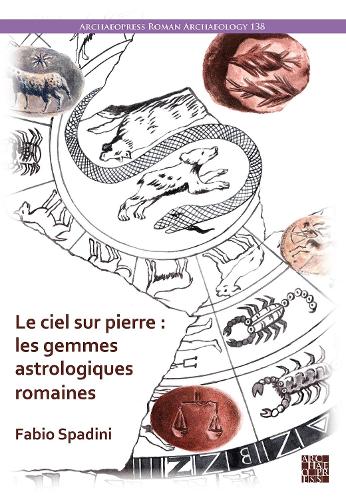
Le ciel sur pierre : les gemmes astrologiques romaines (Ier s. av. J.-C. – IVe s. apr. J.-C.)
This book renews the study of Roman gemstones with astrological motifs (2nd c. BCE–4th c. CE). It establishes new identification criteria, shows all twelve zodiac signs were depicted in varied forms, and introduces a new typology and chronology within their social and religious contexts.
The book revitalizes the long-neglected study of Roman engraved gemstones (2nd c. BCE–4th c. CE) bearing astrological motifs. By establishing new criteria for identification and integrating literary and visual evidence, it demonstrates that all twelve zodiac signs appear on Late Republican and Imperial intaglios—often in previously unrecognized forms. The study proposes a new typology and chronology, situating these gems within their broader social and religious contexts.
This book renews the study of Roman gemstones with astrological motifs (2nd c. BCE–4th c. CE). It establishes new identification criteria, shows all twelve zodiac signs were depicted in varied forms, and introduces a new typology and chronology within their social and religious contexts.
The book revitalizes the long-neglected study of Roman engraved gemstones (2nd c. BCE–4th c. CE) bearing astrological motifs. By establishing new criteria for identification and integrating literary and visual evidence, it demonstrates that all twelve zodiac signs appear on Late Republican and Imperial intaglios—often in previously unrecognized forms. The study proposes a new typology and chronology, situating these gems within their broader social and religious contexts.
Original: $122.72
-65%$122.72
$42.95Description
This book renews the study of Roman gemstones with astrological motifs (2nd c. BCE–4th c. CE). It establishes new identification criteria, shows all twelve zodiac signs were depicted in varied forms, and introduces a new typology and chronology within their social and religious contexts.
The book revitalizes the long-neglected study of Roman engraved gemstones (2nd c. BCE–4th c. CE) bearing astrological motifs. By establishing new criteria for identification and integrating literary and visual evidence, it demonstrates that all twelve zodiac signs appear on Late Republican and Imperial intaglios—often in previously unrecognized forms. The study proposes a new typology and chronology, situating these gems within their broader social and religious contexts.